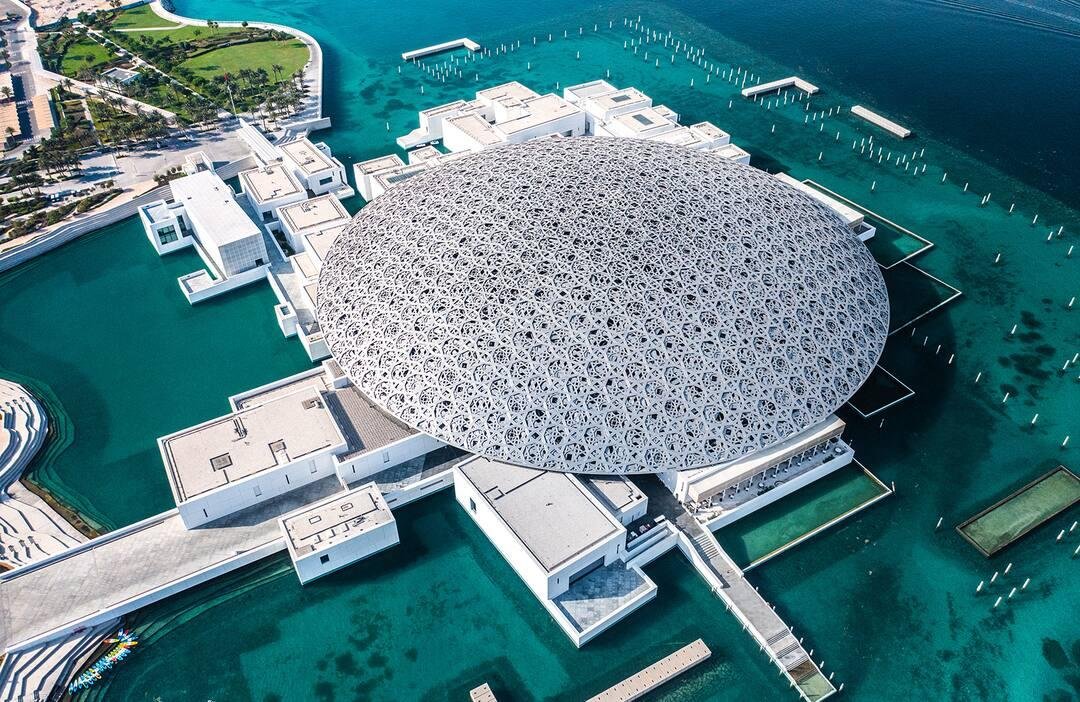
Located on Saadiyat Island, Louvre Abu Dhabi is much more than a museum. It is also one of the Middle East’s most ambitious cultural projects. The museum brings art, architecture, history, and innovation together beneath one iconic dome. In addition, it reflects a unique partnership between the UAE and France. Since opening in 2017, Louvre Abu Dhabi has become one of the most visited museums in the Arab world.
The Spectacular Dome
The first thing visitors notice is the enormous silver dome. It appears to float above the museum and creates one of Abu Dhabi’s most impressive architectural sights.
The dome is 180 meters wide and weighs around 7,500 to 8,000 tons. It is made from eight layers of geometric patterns. In total, the structure contains about 7,850 metal stars arranged in a detailed lattice design.
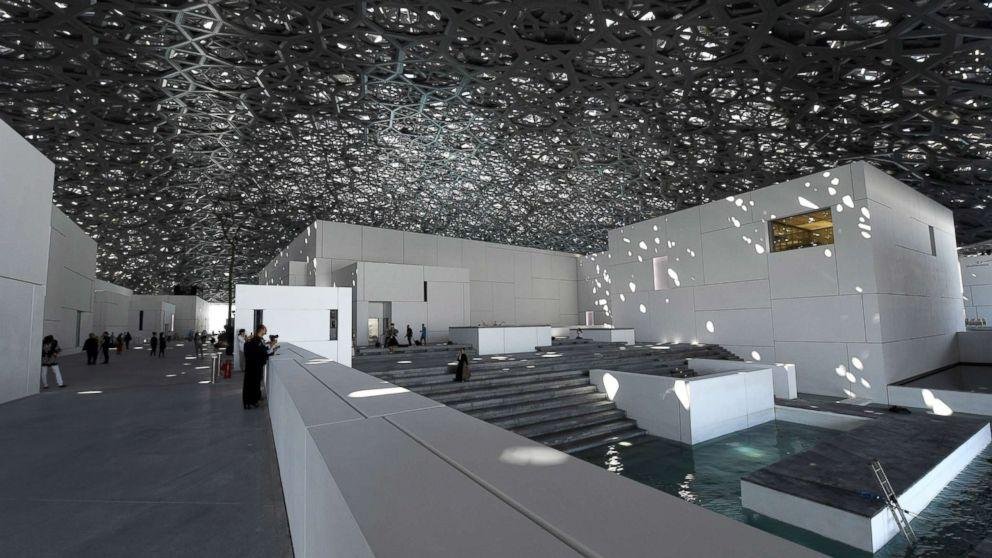
When sunlight passes through the openings, it creates the museum’s famous “Rain of Light.” As a result, thousands of moving beams appear across the walls and walkways. Architect Jean Nouvel designed this effect to resemble sunlight passing through palm trees in an oasis.
A Museum Floating on the Sea
One of the most remarkable features of Louvre Abu Dhabi is its location directly on the water.
The Arabian Gulf surrounds the museum and creates reflections that change throughout the day. As a result, the building often appears to rise from the sea. Many visitors compare the experience to walking through a modern Arab city built on the water.
However, creating this effect required major marine engineering work. Before the seawalls were removed, the site needed years of pumping, waterproofing, and careful construction.
Inspired by an Ancient Medina
Instead of designing one large building, Jean Nouvel created what he called a “museum city.”
The complex includes 55 separate buildings, 23 permanent galleries, open plazas, shaded walkways, and water channels that connect the architecture with the sea.
In addition, the white buildings resemble the traditional homes and narrow streets of historic Arabian medinas. As a result, the museum feels both ancient and futuristic at the same time.
A Universal Museum
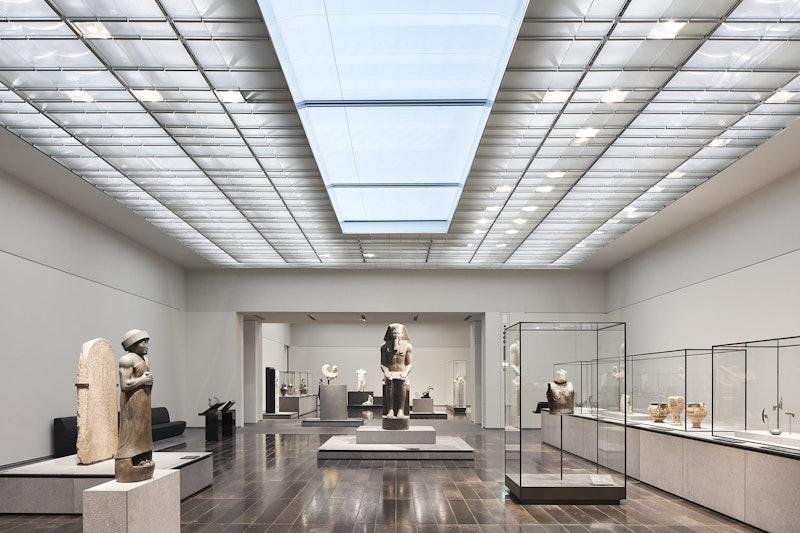
Unlike many museums that organize art by country, Louvre Abu Dhabi presents human history through shared ideas and experiences.
For example, ancient Egyptian objects may appear beside Chinese treasures. Islamic manuscripts may also be displayed near European masterpieces. This arrangement shows how different civilizations influenced one another over thousands of years.
Therefore, the museum presents history as an interconnected story rather than as a series of separate cultures divided by geography.
Masterpieces You Can See
The museum’s collection includes works by some of the world’s most famous artists.
For example, visitors can see works connected to Leonardo da Vinci, Vincent van Gogh, Claude Monet, Henri Matisse, Paul Gauguin, and René Magritte.
In addition, the collection brings together artists from different periods and cultures. This helps visitors understand how artistic ideas developed and influenced one another over time.
Sustainability Hidden in the Design
The dome is not only beautiful. It also serves an important practical purpose.
First, it protects the museum from the intense Abu Dhabi sun. As a result, it helps create a cooler microclimate and reduces the need for air conditioning.
In addition, the building uses passive cooling methods inspired by traditional Middle Eastern architecture. Therefore, the museum can maintain high environmental standards while using less energy.
Why It Matters
Louvre Abu Dhabi is often described as the cultural heart of the UAE. It brings East and West together while also connecting tradition with innovation and history with modern life.
In addition, the museum reflects the UAE’s ambition to become a global center for culture, education, and dialogue. Therefore, Louvre Abu Dhabi is more than a museum. It is also a symbol of connection between people, ideas, and civilizations.
Interesting fact: Stand beneath the dome around midday and look upward. The sunlight creates patterns that constantly move and change. As a result, no two visits feel exactly the same because the “Rain of Light” changes with the position of the sun.
Louvre Abu Dhabi — where art meets the desert!
Louvre Abu Dhabi is one of the most breathtaking museums in the world. Its iconic dome filters sunlight and creates thousands of moving patterns above the water.
Inside, visitors can explore everything from ancient masterpieces to contemporary art. For this reason, the museum is a must-visit attraction during any trip to Abu Dhabi.


Leave a Reply